Coastal Resilience Summary
Kicked off at the Obtawaing Biosphere annual meeting on October 11, 2023, the Coastal Resilience Plan seeks to support communities along the Great Lakes shoreline in creating manageable and science informed plans for the conservation of healthy coasts. In this endeavor, the initiative prioritizes the recognition of interconnections among natural systems, human livelihoods, and diverse cultures through publications, public engagement programs, and various media platforms and the creation forums for collaboration and information sharing across the Great Lakes region. Many habitats and organisms are under threat, and a coordinated, regional, landscape-level approach will optimize opportunities for conservation and restoration.
This project, in partnership with Great Lakes Commission and Axiom Data Science and funded by the Fish and Wildlife Foundation Coastal Program, aims to bolster high-level plans through local knowledge and priorities, and elevate site-level planning to the landscape level where it can address the ecological needs sedentary and migratory animal populations and coastal hazards. Specifically, the Coastal Resilience initiative will address the need for improved coordination and cross-partner collaboration among regional partners and stakeholders, the incorporation of tribal perspectives and priorities into regional planning, and the identification and prioritization of large-scale, high-impact restoration projects in the region.
The Great Lakes region contains approximately 1,700 miles of shoreline, including 577 islands providing habitat for numerous state and federally listed threatened and endangered species, including important breeding and migratory habitat. The impacts of climate change will manifest uniquely in this region, compounding the threat with increased development pressure. Applying best practices and local knowledge through a bioregional approach will be necessary to understand and address impacts from climate change and urban development. Although plans and prioritization tools exist for larger and smaller landscape scales, there is a significant gap in planning and coordination at the Great Lakes basin-level.
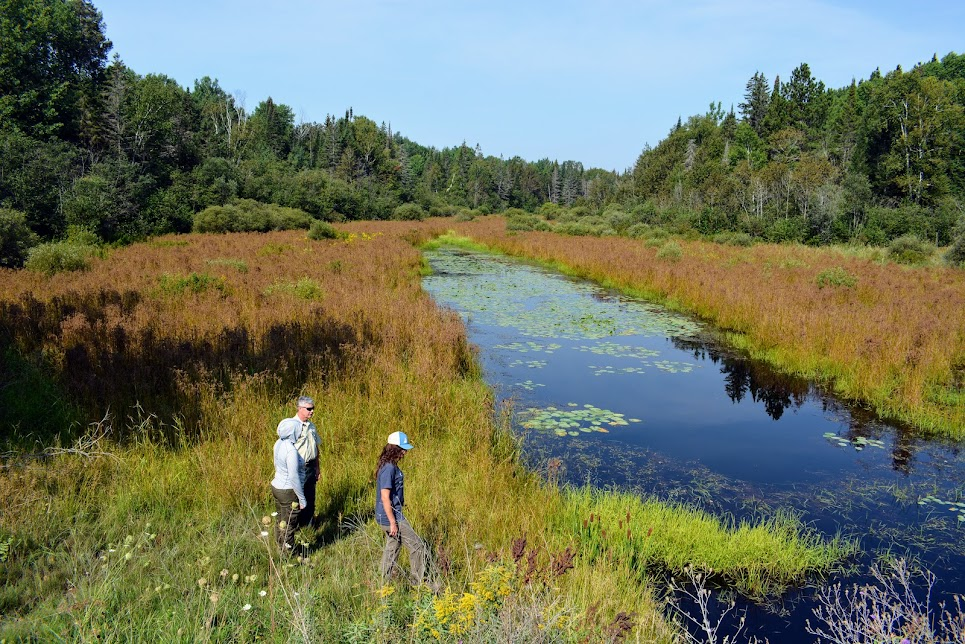
Photo by Huron Pines
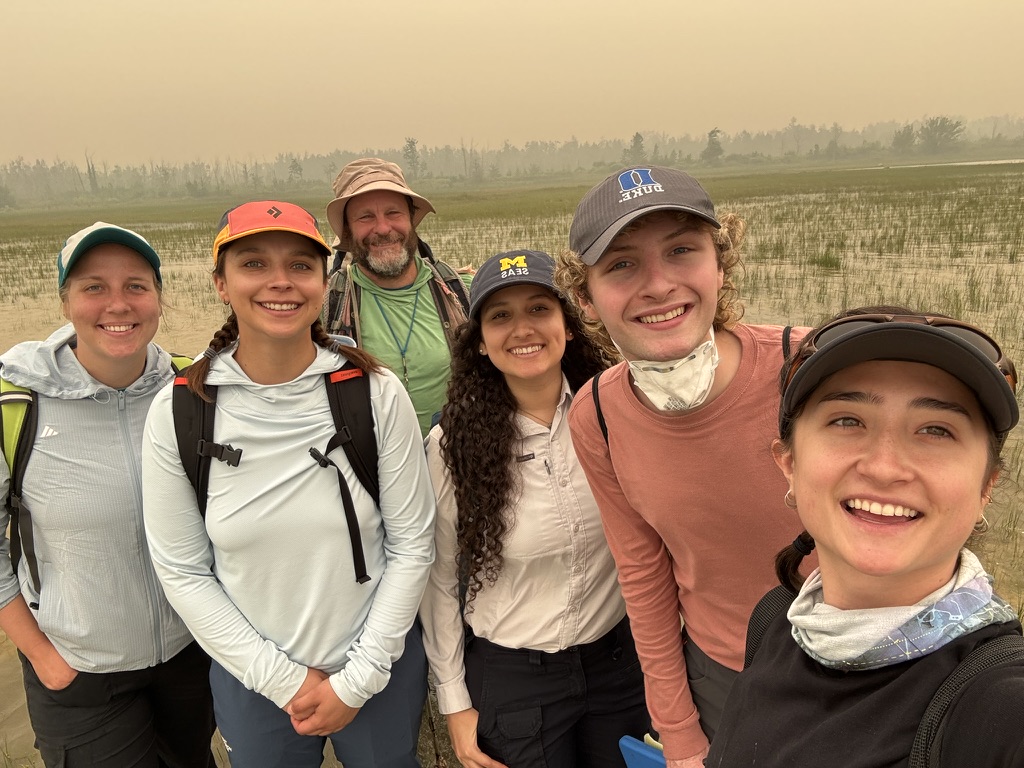
A team of Master’s students at the University of Michigan’s School for Environment and Sustainability: Gwenny Burrows, Margaret Dominic, Kaitlin Fahey, Lauren Gietzen, and Jack Sanitate, advised by Dr. Sheila Schueller, are collaborating with Huron Pines to bridge knowledge and practice for coastal habitat resilience in the Obtawaing Biosphere Region (OBR). This project will braid together existing academic research, traditional ecological knowledge (TEK), and expert knowledge to strengthen the conservation of imperiled and vulnerable coastal habitats.
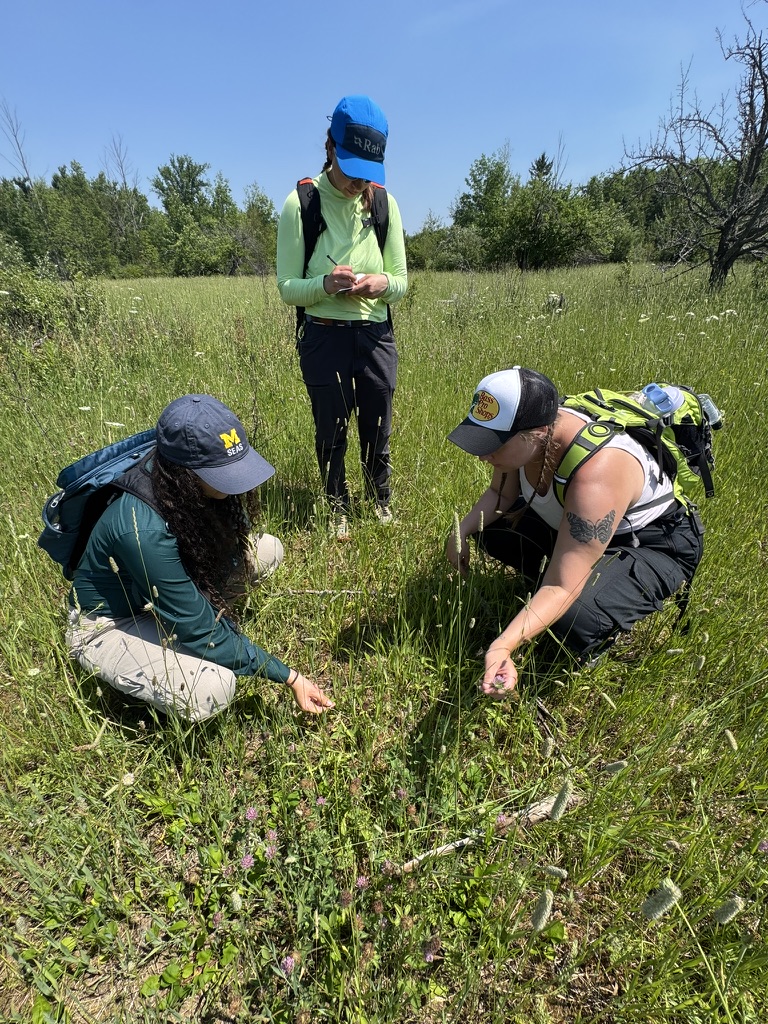
The students will collaborate with regional partners to understand barriers in conserving globally unique natural communities, including Great Lakes Marsh (vulnerable), Limestone Bedrock Glade (imperiled), Open Dune (vulnerable), and Wooded Dune/Swale Complex (vulnerable). By April 2027, the students will work alongside Huron Pines, the City of Alpena, the MDNR (Forestry Division and Parks & Rec Division), and the U.S. Forest Service to co-develop site-specific conservation guidelines informed by interviews with land managers, discussions with experts, and connections with indigenous knowledge holders.
Indigenous communities have stewarded these lands for generations, connecting with the land and emphasizing the importance of reciprocity between people and nature. In an effort to integrate this TEK into current conservation practices, the students will work directly with tribal partners from the Little Traverse Bay Bands (LTBB) of Odawa Indians, one of the federally recognized tribes in Michigan whose lands intersect with the Obtawaing Biosphere Region. Tribal partnerships will help guide students’ research away from historically extractive or unethical practices, instead focusing on authenticity and lasting relationships that include Indigenous communities in conservation. This project aims to foster equitable relationships between land managers and Indigenous knowledge holders, recognize Indigenous history across the OBR, and provide a guide for best practices of TEK inclusion in conservation.
Translational ecology is an action-oriented approach that addresses the disconnect between ecological knowledge and practice, strengthening the relationship between people and nature, where both can thrive together. Beyond positive impact in the OBR, this project strives to provide a valuable model of translational ecology, including ethics surrounding Indigenous engagement, so that this process of collaborative conservation can be replicated in coastal management and biosphere reserves around the world.